The Complete Food Manual · First Edition
Most food advice stops at "good for you." This book stops at the number. For every food: what was actually tested, how much of it, in whom — and what did not move. Two illustrated pages per food, written for the kitchen table.
Instant download · One payment · Yours to keep

I. The problem
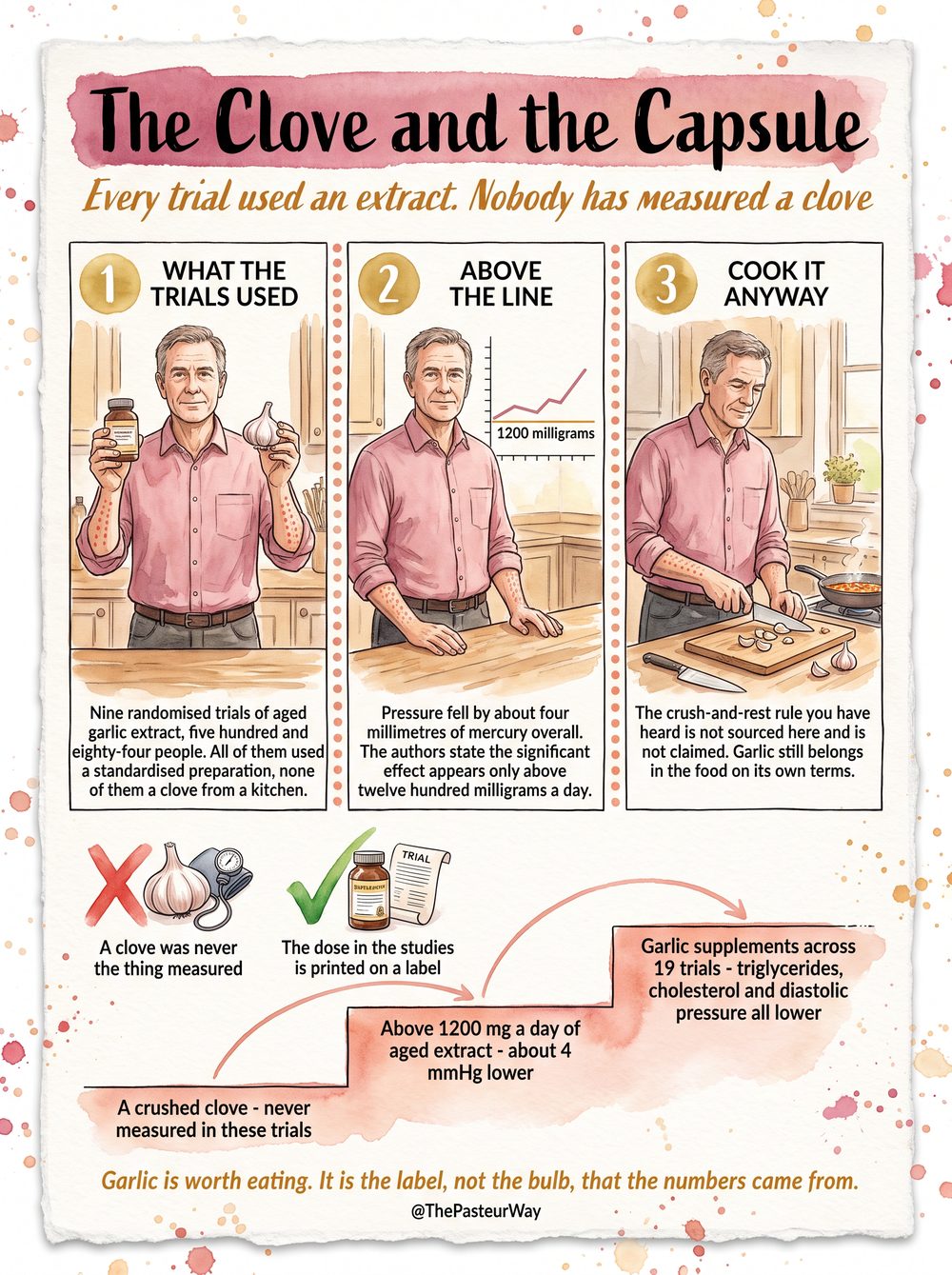
Garlic for blood pressure. Oats for cholesterol. Eggs are bad, then fine, then bad again. Every one of those headlines started from a real study — but the study tested a specific form, a specific amount, in specific people. By the time it reaches your kitchen, all three are gone.
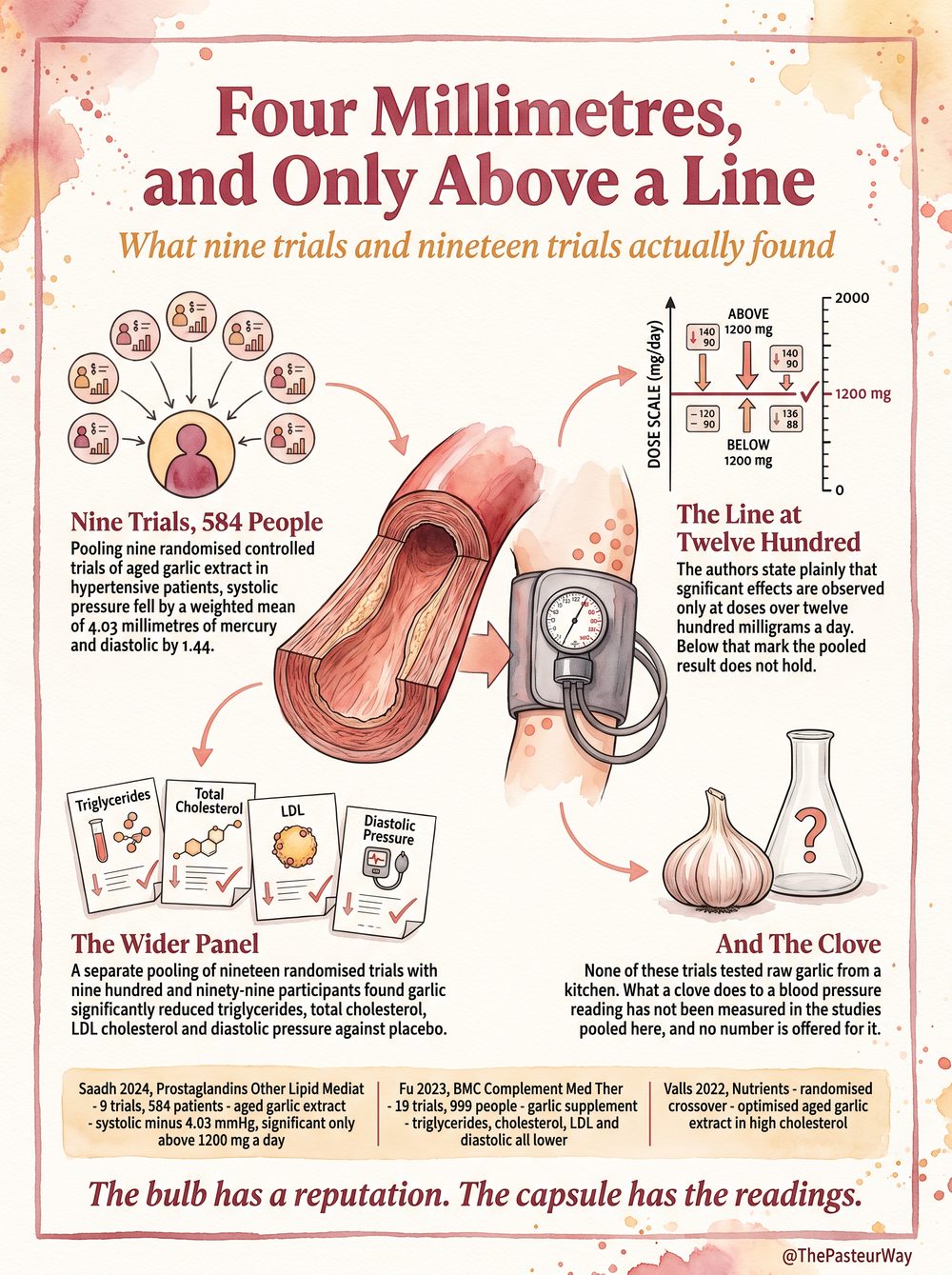
Garlic is worth eating. But it is the label, not the bulb, that the numbers came from.
What the garlic pages actually show
That is one food. The Manual does the same for every food in it.
II. Look inside
The first is the kitchen page — what was tested, how much, and how to use it at home. The second is the evidence page — the trials, the number of people, and the line where an effect starts or stops.


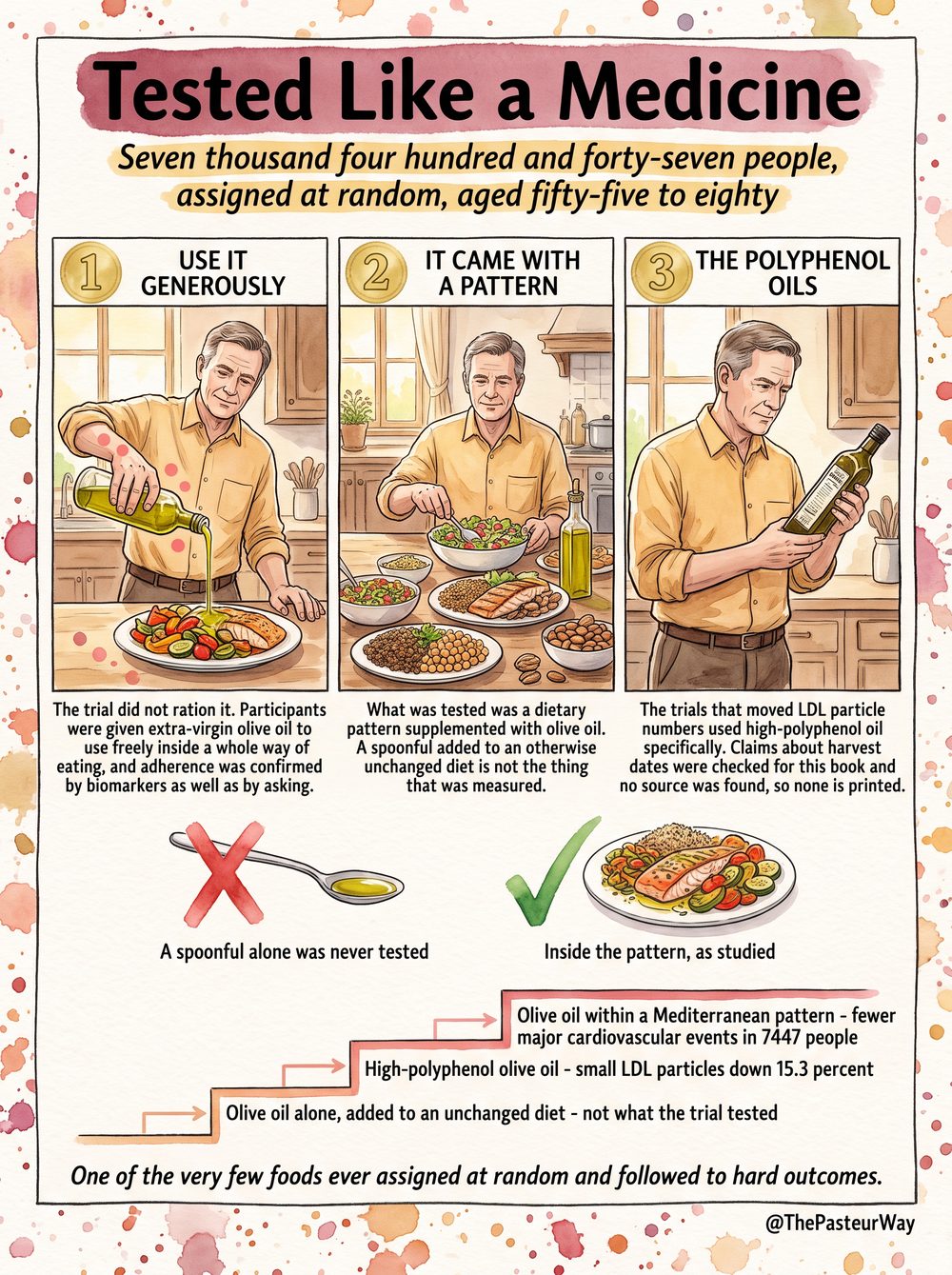
Olive oil. One of the very few foods ever assigned at random and followed to hard outcomes — 7,447 people aged 55 to 80.

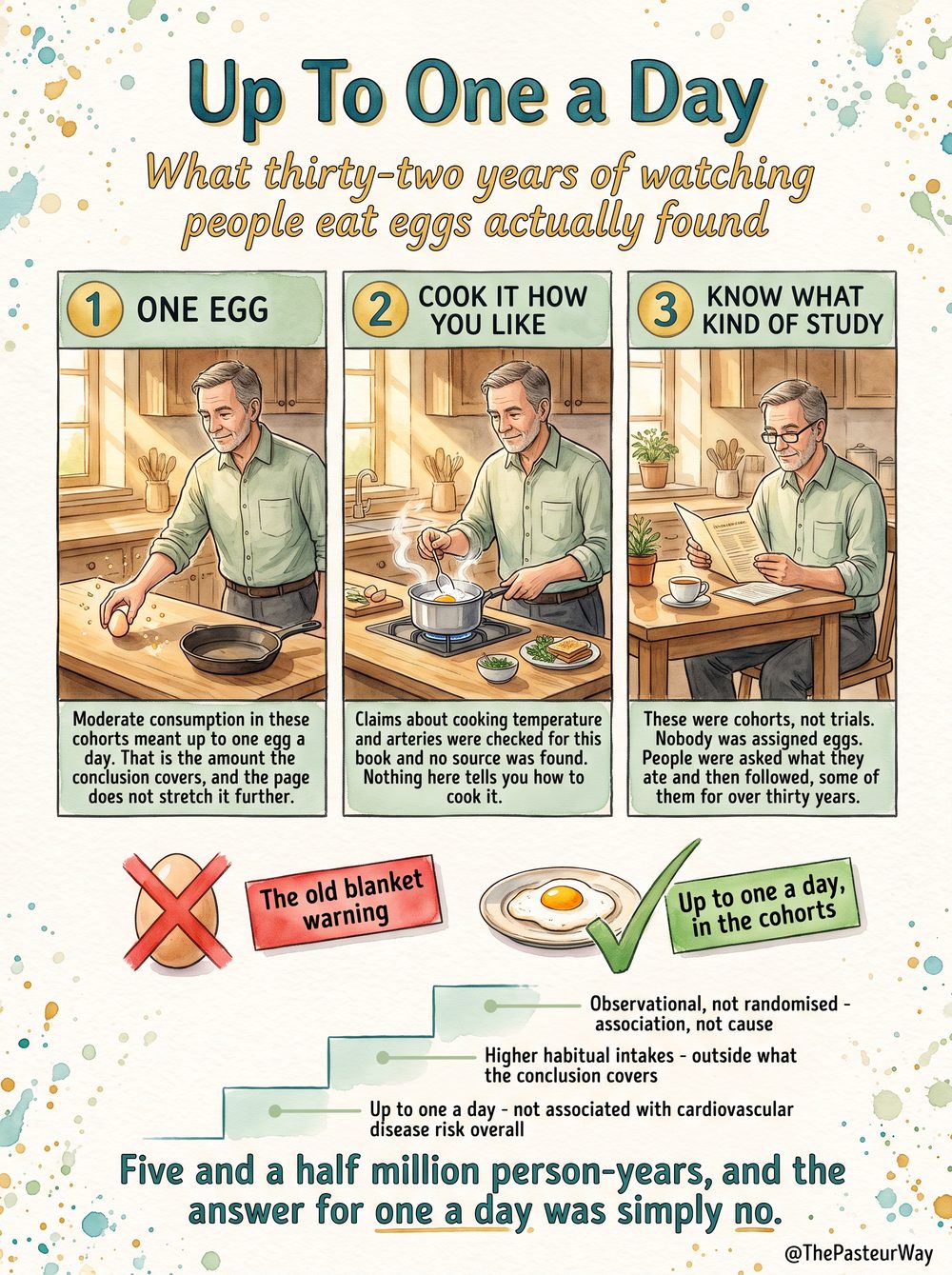
Eggs. Thirty-two years of watching people eat eggs, and what it found for up to one a day.

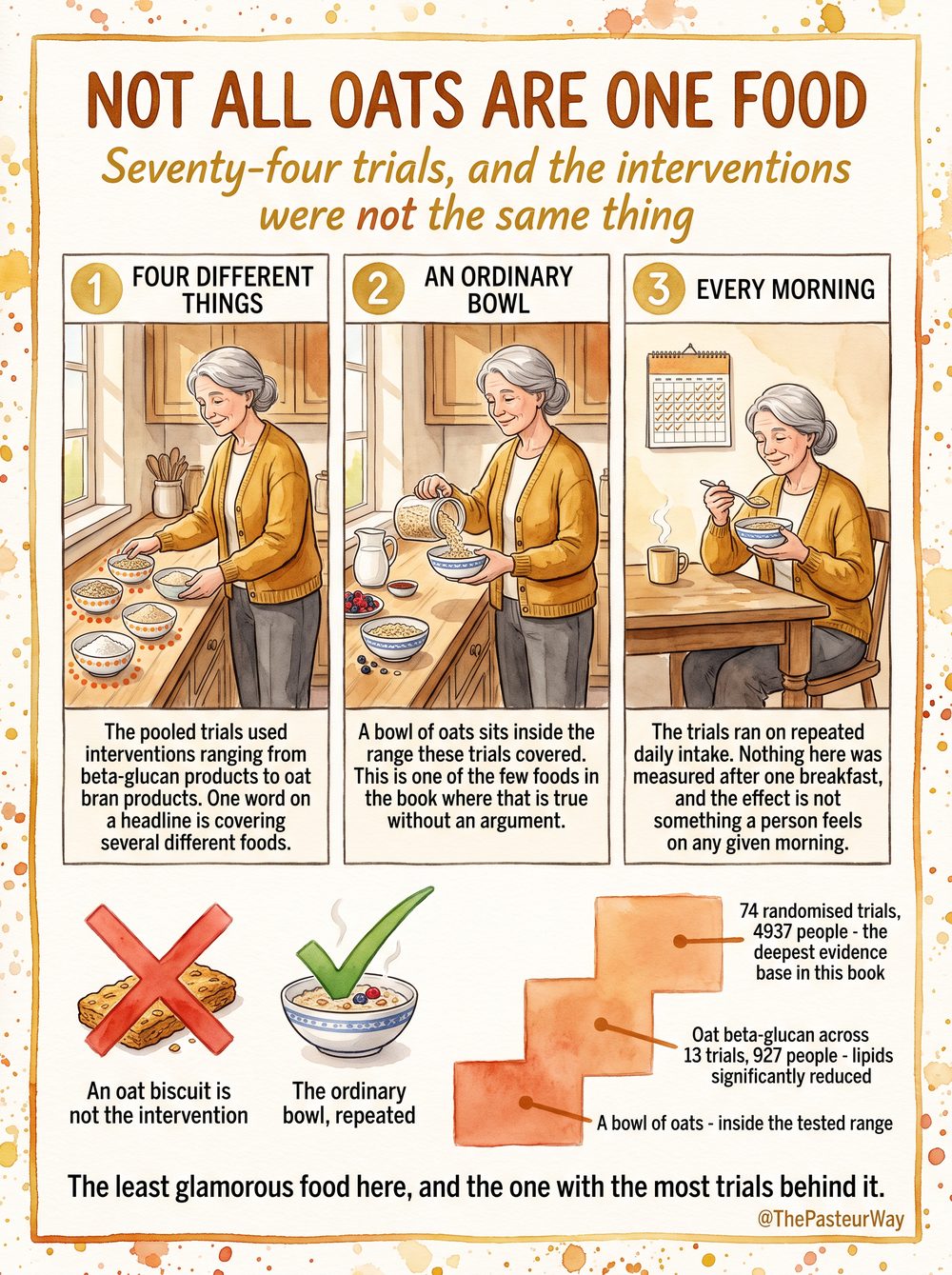
Oats. Seventy-four trials and 4,937 people — and why "oats" in a headline can mean four different foods.
III. What's inside
Arranged by what the food is studied for, so you can open the chapter that matters to you and start there.
25 foods
Onion, Garlic, Beetroot, Tomato, Dark Chocolate, Olive Oil, Salmon, Sardines, Mackerel, Tuna, Walnuts, Almonds, Pistachios, Peanuts & Peanut Butter, Flaxseed, Hibiscus Tea, Pomegranate, Grapes, Watermelon, Red Meat, Avocado, Vitamin C + Plant Iron, Plant Sterols, Salt Substitute, Sweeteners
14 foods
Cooked-and-Cooled Starch, Oats, Barley, Lentils, Chickpeas, Black Beans, Buckwheat, Sourdough Bread, Cinnamon, Apple Cider Vinegar, Dates, Raisins, Sweet Potato, Carrot
19 foods
Pineapple, Kefir, Greek Yogurt, Sauerkraut, Kombucha, Miso, Prunes, Kiwi, Papaya, Apple, Banana, Asparagus, Leek, Celery, Peppermint, Chamomile, Ginger, Chia, Processed Meat
8 foods
Coffee, Green Tea, Black Tea, Blueberries, Tart Cherries, Eggs, Oysters, Liver
9 foods
Cottage Cheese, Milk, Goat Milk, Chicken, Soy, Edamame, Turmeric, Bone Broth, Turmeric + Black Pepper
7 foods
Kale, Spinach, Aged Cheese, Cabbage, Sesame, Brazil Nuts, Butter
11 foods
Grapefruit, Seville Orange & Marmalade, Licorice, Cranberry, Lemon, Salt, Coconut Oil, Honey, Alcohol, Fruit Juice, Water
18 foods
Mushrooms, Broccoli, Cauliflower, Bell Pepper, Orange, Black Pepper, Chili Pepper, Oregano, Rosemary, Cloves, Cumin, Parsley, Mustard, Seaweed, Mango, Sunflower Seeds, Pumpkin Seeds, Fat + Coloured Vegetables
IV. The medicine cabinet
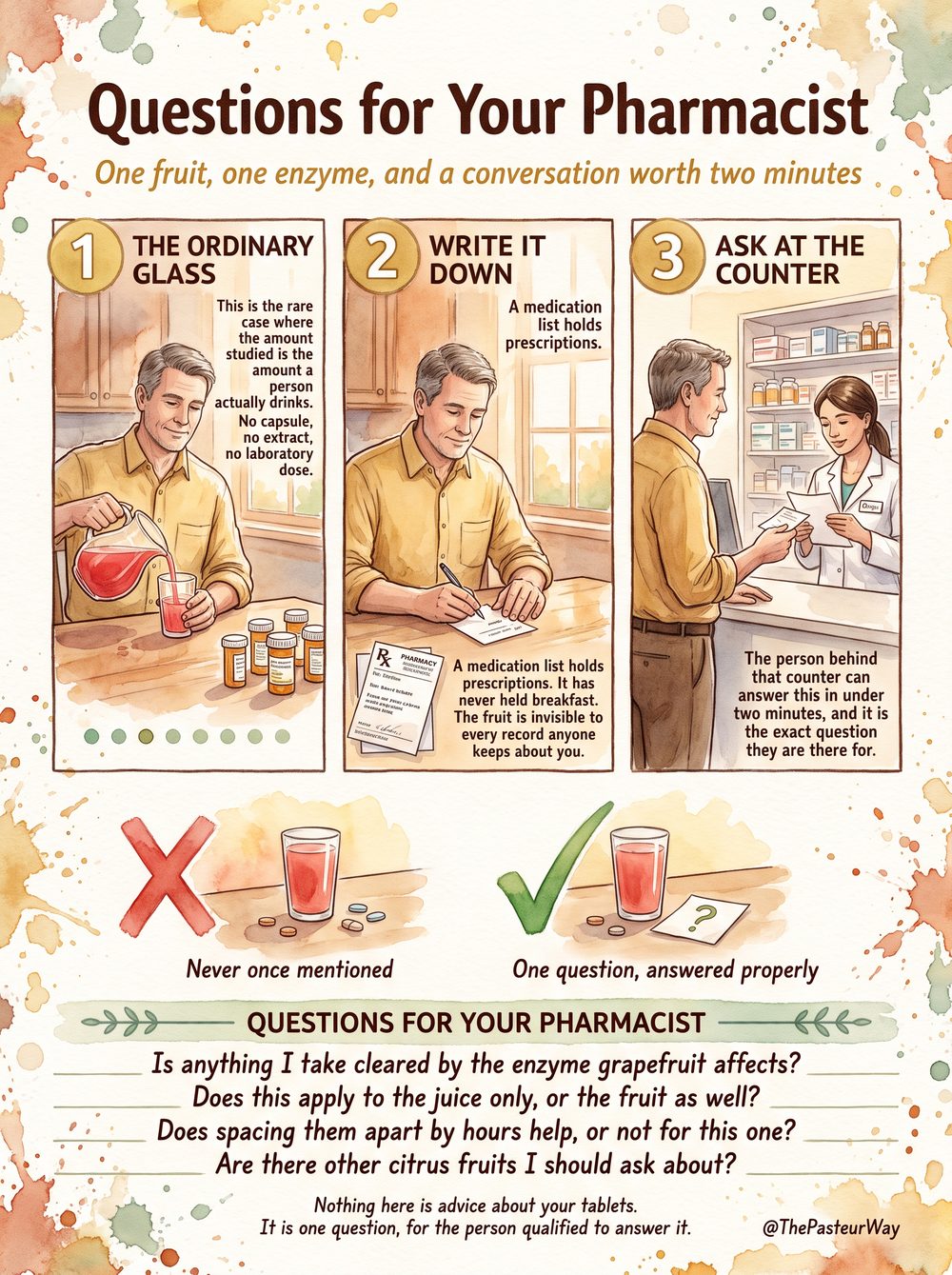
A glass of juice can raise the level of a medicine in your blood. A bowl of greens can change how a blood thinner behaves. Those foods are marked in the Manual, with the plain questions to bring to your pharmacist — the person qualified to answer them.
Nothing in the book tells you to change your medicine. It tells you which question to ask.

V. Is it for you
Not for you if

VI. Why "Pasteur"
Louis Pasteur (1822–1895) changed what we eat and drink by refusing to accept what everyone already "knew". People believed food spoiled on its own. He sealed broth in a swan-necked flask, waited, and showed that nothing grew until something from outside got in. The answer came from the flask, not from the argument.
The Pasteur Way follows that habit. Every page of the Manual starts from what a study actually measured — the form of the food, the amount, the people, the result — and says plainly where the evidence stops.
The channel and this book are an independent project named in his honour. They are not affiliated with the Institut Pasteur or any medical body.

VII. Get the Manual
Secure checkout by Buy Me a Coffee · Instant download
VIII. Questions
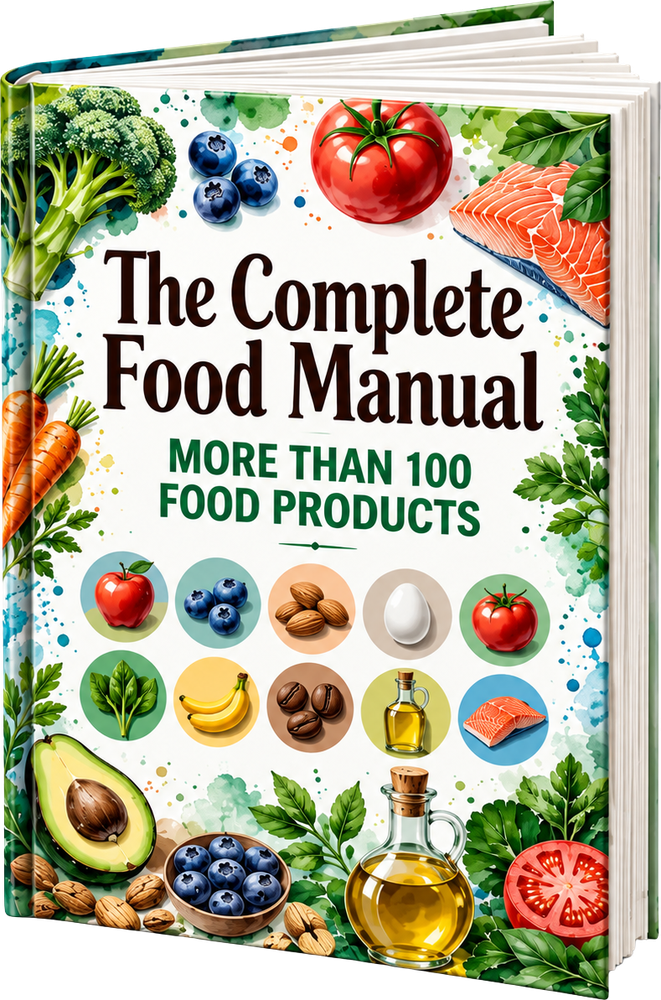
One PDF file: The Complete Food Manual, 222 full-colour illustrated pages covering more than 100 foods. The download link appears straight after payment and is also sent to your email.
Yes — on any phone, tablet or computer that opens a PDF. It is a large, high-resolution file, so download it over Wi-Fi. Once saved, it works without the internet.
Yes. Many readers print the pages for the foods they use most and keep them in the kitchen. The pages are tall portrait format and print well on standard A4 or Letter paper.
The Manual was designed for readers over 50: large lettering, high contrast, and one food per pair of pages. On a tablet you can also zoom into any part of a page.
The book does not tell anyone to start, stop or change a medicine. For the foods known to interact with medicines, it gives you the questions to ask your pharmacist or doctor — please ask them before changing your diet.
No. The Manual reports what published studies measured, in plain language. It is an educational reference, not a substitute for advice from your own doctor.
Email contact@pasteurway.com within 30 days of purchase and you get the full $29.99 back. No explanation needed.
No. You pay $29.99 once and the book is yours to keep.
More than 100 foods. 222 illustrated pages. One payment of $29.99, and a 30-day guarantee.
Get the Manual · $29.99